















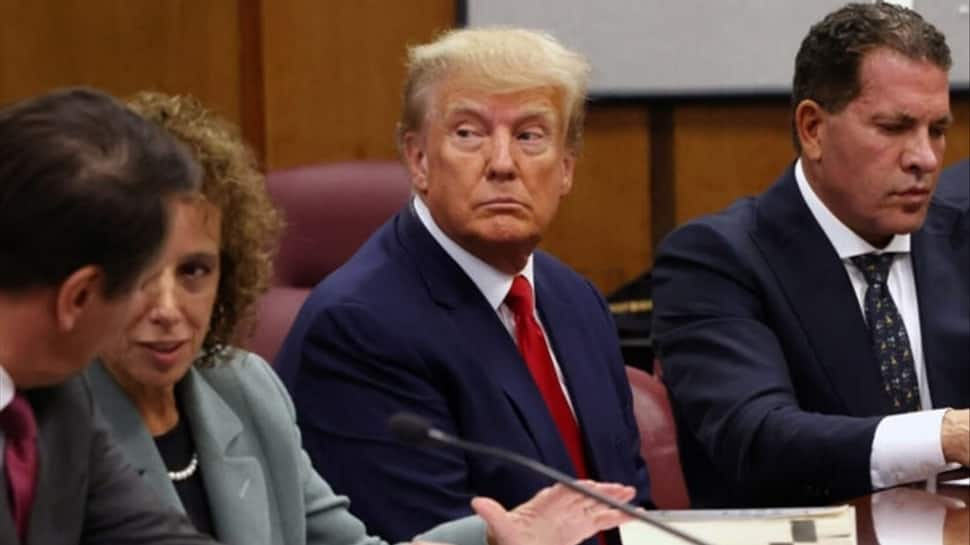

MIAMI: A federal indictment against Donald Trump accuses the former president of illegally hoarding classified documents at his Florida estate after leaving the White House in 2021, and then planning to thwart government efforts to recover them And lied. Justice Department prosecutors leveled 37 felony charges against Trump in the indictment, relying on photographs from Mar-a-Lago, surveillance video, text messages between employees, Trump’s own words, those of his lawyers, and other evidence.
Walt Nauta, an aide of Trump, was charged as a co-conspirator on six felony counts. Trump maintains he is innocent and has denounced the criminal case, the second indictment against him in just months, as an attempt by his political opponents to hinder his 2024 campaign. He is expected to make his first court appearance on Tuesday in Miami. Here are the highlights of the unsealed indictment on Friday:
37 What are the charges?
Trump is charged with 37 felonies, including 31 counts of willful retention of national defense information under the Espionage Act. Other charges included: conspiracy to obstruct justice; corruptly concealing any document or record; concealing a document in a federal investigation; and making false statements. Each willful retention count relating to a specific classified document found at Mar-a-Lago is marked ‘Secret’ or ‘Top Secret.'” Topics addressed in the documents include US nuclear weapons, a foreign country’s nuclear capabilities, and the military of other countries. Activities or Capabilities.
The conspiracy charges relate to Trump’s alleged efforts to hide documents from his attorney or federal investigators. The false statement charges led to Trump’s attorney telling the FBI that no more classified documents were at Mar-a-Lago, but the FBI later found over 100 documents during an August 2022 search. The most serious charges carry a possible prison sentence of up to 20 years. But judges have discretion and, if convicted, first-time offenders rarely get anywhere near the maximum sentence. Being a former president will also be a major consideration in any sentencing.
What is the alleged conspiracy to obstruct justice?
The indictment accuses Trump and Nauta of conspiring to conceal secret documents from a grand jury, which issued a subpoena to them in May 2022 to hand them over. The conspiracy charge included a suggestion by Trump that the lawyer falsely told investigators that the former president had no more classified documents at Mar-a-Lago. It also included moving boxes to hide secret documents from Trump’s attorney, and suggested that Trump’s attorney hide or destroy documents that investigators were seeking.
The indictment states that, at Trump’s direction, Nauta moved approximately 64 boxes of documents from a Mar-a-Lago storage room to the former president’s residence in May 2022. He then returned ‘about 30 boxes’ to the storage room on 2 June. That same day Trump’s legal team came to check the boxes and search for classified documents to return to the government, the indictment says.
The indictment says Nauta had a brief phone call with Trump before returning those boxes. The indictment says that neither Trump nor Nauta told the former president’s lawyers that Nauta had moved any of the contents of the storage room.
Is Trump accused of sharing classified information?
The indictment alleges that Trump on two occasions showed classified documents to people who did not have security clearance. Court papers detail Trump meeting with an author and publisher in July 2021 about an upcoming book. According to an audio recording of that conversation obtained by investigators, Trump told the pair “look what I found” and described them as a “plan of attack” to a senior military officer. Trump acknowledged during that meeting that the document was “highly confidential” and “secret information,” the indictment says. He also says that if he were still president, he would have made the document public.
“Now I don’t know, you know, but it’s still a mystery,” he said, according to the indictment. A few months later, Trump showed a representative of his political action committee a classified map of a foreign country while discussing a military operation in the country that was not going well, the indictment says. Prosecutors allege that Trump admitted that he should not have shown the man the map and told him not to get too close to him.
What evidence do prosecutors have?
In addition to audio recordings, prosecutors also relied on text messages between Trump staffers, photographs of boxes of documents stored in various rooms at Mar-a-Lago, and details of conversations between Trump and his lawyers, which were recorded by one of them at the memorial. Were. In a conversation with his lawyers, Trump said: “I don’t want anybody looking at my boxes.” The indictment says Trump also asked one of his lawyers if it would be better “if we tell them we don’t have anything.”
Photos in the indictment show the box placed on a stage in a ballroom as well as a bathroom. Shows another box spread out in a storage room, containing a document marked ‘SECRET/REL TO USA, FVY’, meaning only members of the ‘Five Eyes’ intelligence alliance of Australia, Canada, New Zealand, United Notice may be issued for United States of america.
Where will the case be heard?
While Trump’s first court appearance is expected before a magistrate judge in Miami on Tuesday, the case was filed in West Palm Beach, about 70 miles to the north. The case was assigned to Trump-appointed Judge Eileen Cannon, who issued rulings favorable to her last year and has repeatedly expressed skepticism of Justice Department positions.
Cannon was widely criticized last year for acceding to the Trump legal team’s request for a special master to conduct an independent review of hundreds of classified documents seized from his Florida estate last year. The move, which temporarily halted key aspects of the Justice Department’s investigative work, was overturned months later by a three-judge panel of a federal appeals court.


