

/cdn.vox-cdn.com/uploads/chorus_asset/file/24016885/STK093_Google_04.jpg)


/cdn.vox-cdn.com/uploads/chorus_asset/file/24808816/Starfield__The_Settled_Systems___Supra_Et_Ultra_____Starfield__The_Settled_Systems___Supra_Et_Ultra_2023_7_25_94252.263_1440p_streamshot.png)










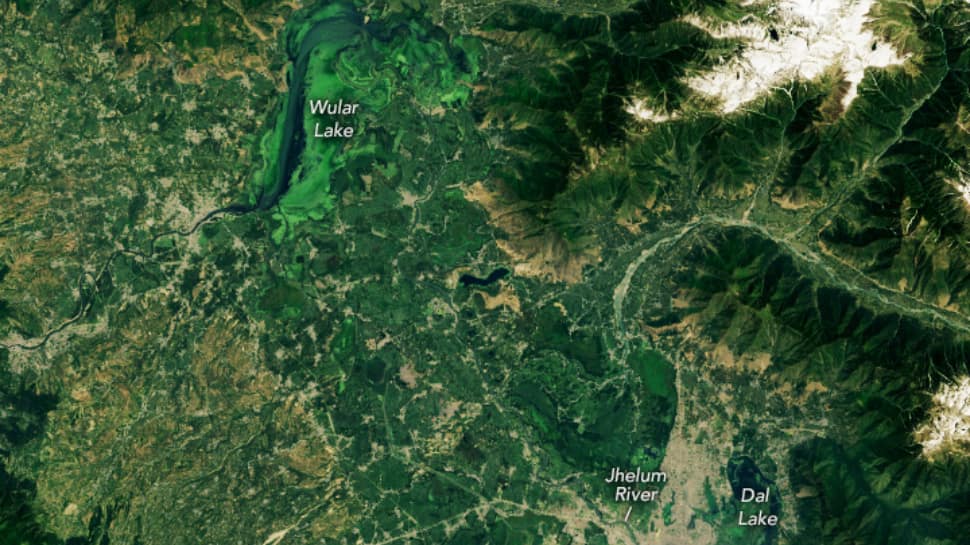

The National Aeronautics and Space Administration (NASA) on Tuesday shared pictures of two major fresh water lakes in the Kashmir Valley, which are showing drastic depletion. This picture of Wular and Dal Lake in Kashmir was taken by the Operational Land Imager (OLI) on Landsat 8 satellite on June 23, 2020. Wanmei Liang took the picture for the NASA Earth Observatory using Landsat data from the US Geological Survey. Emily Cassidy wrote a report which explains the reasons behind the shrinking of the lakes of Kashmir.
The image shows two water bodies. The larger water body is Wular Lake, which is on the left side of the image. It is the largest freshwater lake in India and one of the largest lakes in Asia. The lake is part of the Jhelum River and provides fresh water and fish to the people living nearby. There are many wetlands around the lake which are home to migratory birds, such as ducks, seagulls, geese and storks. The lake is a “wetland of international importance” according to Ramsar International, which gave it this designation in 1990.
There is Chhota Dal, which is located in the middle of Srinagar, the largest city of the valley. The lake draws tourists with its houseboats, market and floating marshes on the water. Surrounding the lake are terraced gardens with fountains and various plants.
Also read: Earthquake In Jammu-Kashmir: Earthquake tremors were felt in areas of Jammu and Kashmir
Reasons for shrinking of Wular Lake
eutrophication
The report states that the flow of sediment and nutrients into the lake over the past few decades has contributed to the rapid growth of algae and aquatic vegetation. The report cites eutrophication, a process where organic and mineral nutrients supporting abundant aquatic plant life deplete the oxygen supply in the process of decomposition.
urbanization
According to the report, conversion of forests to urban areas is a major reason behind the change in water quality. Heavy sediment, nutrient load and discharge of untreated sewage into the lake have equally contributed to the shrinking. “Researchers in India used water samples and data from Landsat satellites to assess the biological health of the lake. They found that about 57 per cent of Wular Lake was eutrophic in 2018.
Also Read: Who Is Arifa Jaan, The Kashmiri Entrepreneur Behind Reviving Traditional Namda Craft, Training Over 100 Women
Some bright green areas on the eastern side of Wular Lake that used to be open water have now turned into nutrient-rich sediments and aquatic vegetation has filled parts of the lake and its shrinking in recent decades, the report said. Contributed to.
Reasons behind the decline in the area of Dal Lake
Chhoti Dal Lake has also met a similar fate due to land cover change. Researchers in Srinagar found that land conversion for urban development in the basin worsened the lake’s water quality and contributed to its reduced size.
percentage of area has already shrunk
A 2022 research using data from the Indian Space Research Organisation’s (ISRO) LISS-IV instrument found that the open water area of Wular Lake had shrunk in size by about one-fourth between 2008 and 2019. They found that between 1980 and 2018, the area of Srinagar’s famous Dal Lake shrunk by 25 percent


