
















Indian authorities are struggling to quell an ethnic conflict in the northeastern state of Manipur that has killed more than 100 people and displaced more than 50,000, according to activists, as analysts warned the unrest was already Only an unstable border can destabilize the region.
Demographic displacement and security fears broke out last month between the ethnic Meitei people who live in the valley around the capital Imphal and make up more than half of Manipur’s population of about three million, and the Kuki and Naga, hill-dwelling tribal communities . of minority privileges.
Manipur, which means “Land of Gems” in Sanskrit, has long been plagued by ethnic strife, and was drawn into a wider insurgency in the northeast for liberation that has raged since India’s independence.
But unlike previous outbreaks that pitted insurgents against New Delhi, the current clashes have mainly involved civilians, who have looted thousands of weapons from police, including assault rifles and ammunition, local media reported, citing unnamed official sources. Referring to Last week, two women and a child were burnt alive in an ambulance by a mob on the outskirts of Imphal, an atrocity that shocked Indians.
New Delhi set up a committee over the weekend to encourage peace talks between the communities, but the process has failed to get off the ground. A local state police official said on Wednesday that at least nine people had been killed in clashes the previous day, Reuters reported. Security forces have been deployed in an effort to maintain order.
The violence has prompted hundreds of Manipur residents to seek refuge along the border with Myanmar’s Chin state, which itself has been wracked by clashes between rebel groups and forces of General Min Aung Hlaing’s military junta. Journalists have faced a ban on reporting from Manipur, and an internet blackout for over a month.
The conflict in Manipur has a sectarian background: most Meitei are Hindu, while the Kuki are predominantly Christian. About 250 churches have been destroyed in the fighting, according to local religious and civil society groups.
The state government’s drive to crack down on opium cultivation in protected forests and the drug trade in the mountainous border region has also fueled local grievances, as have tensions over immigration from Bangladesh and Myanmar to the northeast – an emotional The issue which Prime Minister Narendra Modi has raised on the national platform.
But analysts and local residents said the conflict was mainly related to land privileges and other rights reserved for tribal groups, which date back to the British colonial period.
The latest clashes occurred on May 3, when Kukis and Nagas organized a rally to protest against a court order to expedite plans to grant “Scheduled Tribe” status to the Meitei people. The designation will provide affirmative action benefits currently reserved for tribal groups and give the Meitei, who live in the lowlands, the right to live in hilly areas.
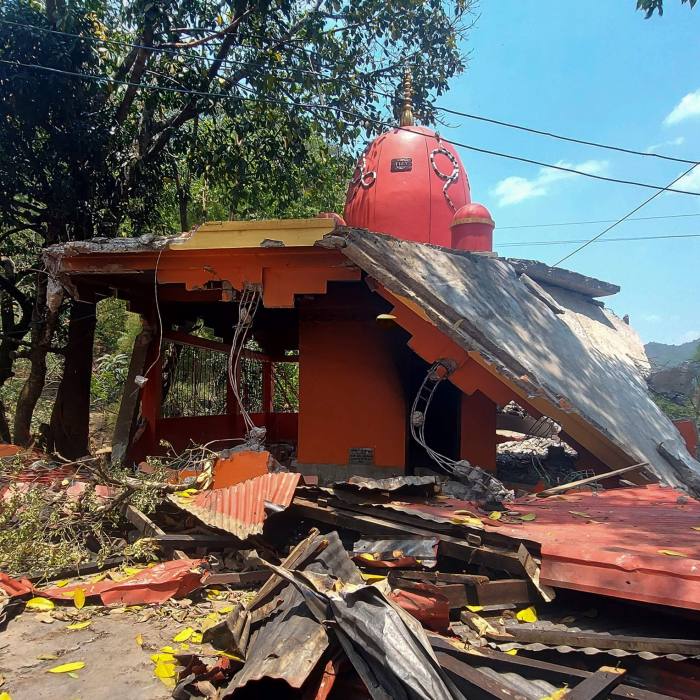
A destroyed Hindu temple in Kangpokpi village, about 43 km from Imphal © AFP via Getty Images

A burnt-out church in Langching village, about 45 km from Imphal © AFP via Getty Images
Meiti and social activist Khuraizam Athauba said the conflict was a “battle to correct the demographic imbalance in the hills caused by illegal migrants from across the border”.
Kuki has accused the state government, controlled by Modi’s Hindu nationalist Bharatiya Janata Party, of favoring the Meitei, but encouraged the central government to intervene to restore order.
“This is state-sponsored violence,” said George Guite, who runs a non-governmental organization that advocates for the rights of cookies.
“Meiteis control everything, including the police commandos,” he said.
Ahead of national elections next year, the opposition Indian National Congress has seized on the conflict to attack Modi, who has not visited the state or publicly addressed the unrest since the current unrest began last month. Is.
Pradeep Phanjoubam, editor of the Imphal Review of Arts and Politics, said, “It’s been over 40 days now and the prime minister hasn’t said a word.”
Referring to a collision earlier this month, he said, “There was a train accident and he reached there and made all kinds of optics, but did not say anything about Manipur.”
India’s home affairs minister and Modi’s top deputy Amit Shah visited the state late last month and appealed for calm. India has deployed around 40,000 security forces in Manipur and is trying to create a buffer zone between the plains and the mountains.
But Guite, a Kookie activist, downplayed the prospects for reconciliation. He said, “We cannot start living together as before, even if there is peace.”

Indian authorities are struggling to quell an ethnic conflict in the northeastern state of Manipur that has killed more than 100 people and displaced more than 50,000, according to activists, as analysts warned the unrest was already Only an unstable border can destabilize the region.
Demographic displacement and security fears broke out last month between the ethnic Meitei people who live in the valley around the capital Imphal and make up more than half of Manipur’s population of about three million, and the Kuki and Naga, hill-dwelling tribal communities . of minority privileges.
Manipur, which means “Land of Gems” in Sanskrit, has long been plagued by ethnic strife, and was drawn into a wider insurgency in the northeast for liberation that has raged since India’s independence.
But unlike previous outbreaks that pitted insurgents against New Delhi, the current clashes have mainly involved civilians, who have looted thousands of weapons from police, including assault rifles and ammunition, local media reported, citing unnamed official sources. Referring to Last week, two women and a child were burnt alive in an ambulance by a mob on the outskirts of Imphal, an atrocity that shocked Indians.
New Delhi set up a committee over the weekend to encourage peace talks between the communities, but the process has failed to get off the ground. A local state police official said on Wednesday that at least nine people had been killed in clashes the previous day, Reuters reported. Security forces have been deployed in an effort to maintain order.
The violence has prompted hundreds of Manipur residents to seek refuge along the border with Myanmar’s Chin state, which itself has been wracked by clashes between rebel groups and forces of General Min Aung Hlaing’s military junta. Journalists have faced a ban on reporting from Manipur, and an internet blackout for over a month.
The conflict in Manipur has a sectarian background: most Meitei are Hindu, while the Kuki are predominantly Christian. About 250 churches have been destroyed in the fighting, according to local religious and civil society groups.
The state government’s drive to crack down on opium cultivation in protected forests and the drug trade in the mountainous border region has also fueled local grievances, as have tensions over immigration from Bangladesh and Myanmar to the northeast – an emotional The issue which Prime Minister Narendra Modi has raised on the national platform.
But analysts and local residents said the conflict was mainly related to land privileges and other rights reserved for tribal groups, which date back to the British colonial period.
The latest clashes occurred on May 3, when Kukis and Nagas organized a rally to protest against a court order to expedite plans to grant “Scheduled Tribe” status to the Meitei people. The designation will provide affirmative action benefits currently reserved for tribal groups and give the Meitei, who live in the lowlands, the right to live in hilly areas.
A destroyed Hindu temple in Kangpokpi village, about 43 km from Imphal © AFP via Getty Images
A burnt-out church in Langching village, about 45 km from Imphal © AFP via Getty Images
Meiti and social activist Khuraizam Athauba said the conflict was a “battle to correct the demographic imbalance in the hills caused by illegal migrants from across the border”.
Kuki has accused the state government, controlled by Modi’s Hindu nationalist Bharatiya Janata Party, of favoring the Meitei, but encouraged the central government to intervene to restore order.
“This is state-sponsored violence,” said George Guite, who runs a non-governmental organization that advocates for the rights of cookies.
“Meiteis control everything, including the police commandos,” he said.
Ahead of national elections next year, the opposition Indian National Congress has seized on the conflict to attack Modi, who has not visited the state or publicly addressed the unrest since the current unrest began last month. Is.
Pradeep Phanjoubam, editor of the Imphal Review of Arts and Politics, said, “It’s been over 40 days now and the prime minister hasn’t said a word.”
Referring to a collision earlier this month, he said, “There was a train accident and he reached there and made all kinds of optics, but did not say anything about Manipur.”
India’s home affairs minister and Modi’s top deputy Amit Shah visited the state late last month and appealed for calm. India has deployed around 40,000 security forces in Manipur and is trying to create a buffer zone between the plains and the mountains.
But Guite, a Kookie activist, downplayed the prospects for reconciliation. He said, “We cannot start living together as before, even if there is peace.”


