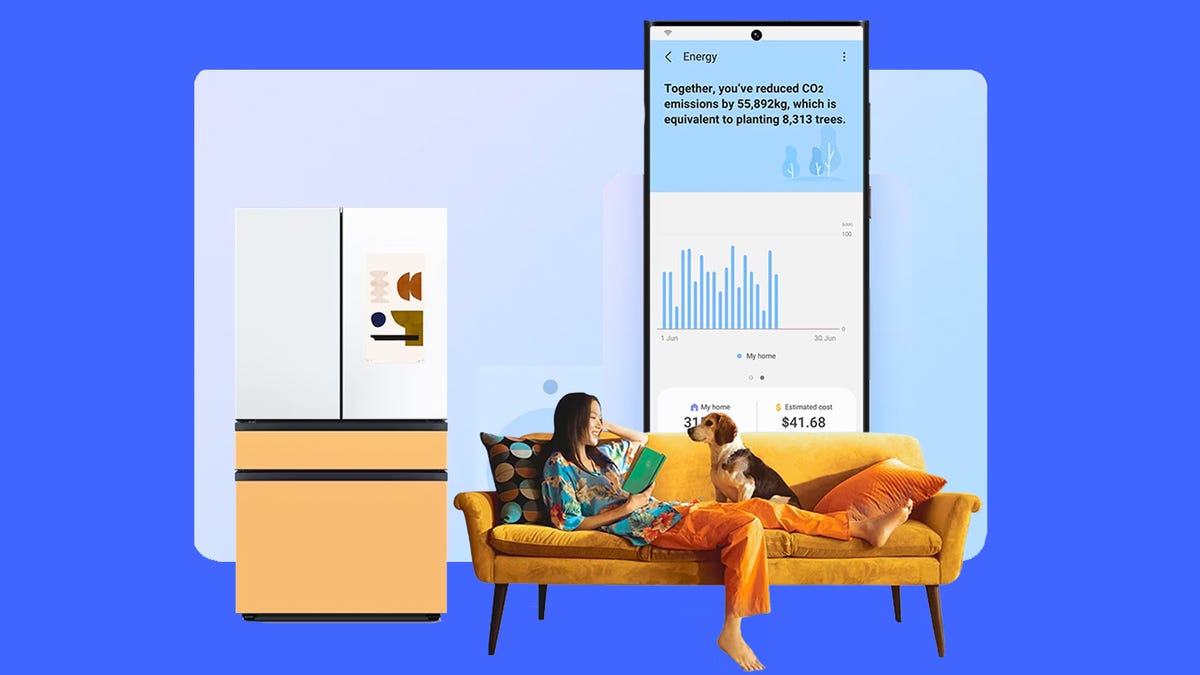

SmartThings Energy gives users a snapshot of their entire home’s energy consumption. SmartThings/ZDNET
We need all the savings we can get in times like these, where grocery prices are still high and news of layoffs can’t stay away from the headlines. A smart home can help save some money – you can rest easy knowing you didn’t forget to turn off the lights before bedtime because Alexa did it for you. SmartThings can help you see your home energy consumption in black and white, empowering you to do more with that information than ever before.
Now, SmartThings Energy is adding additional features to its platform, including the inclusion of artificial intelligence to optimize home energy use, a partnership with Electricity Maps to provide energy source insights, and more commonly used third-party energy sources. -Support for side devices, includes advanced automatic response functionality for intelligent. Device management, and cash rewards and savings during high energy consumption periods.
Too: The Apple Home app is finally getting this useful feature
Samsung has added AI Energy Mode to its products so that they use the least amount of energy. It helps me adapt intelligently to my environment, so I can learn and adjust if the temperature in the room changes, learn how to weigh the drum in the washing machine, detect if the fridge door is open was abandoned, etc.
Barry Holland, Director of Product Management at SmartThings Energy, said: “With energy costs at an all-time high, it has never been more important to provide users with effective solutions to reduce their energy spend and consumption. ”
Too: Can Your Smart Hub Do It? Samsung’s $59 SmartThings Station puts innovation where it counts
Because these devices use advanced systems on select cycles and products to save energy up to 70%, the changes have helped customers using AI Energy Mode within SmartThings save more than 1.8 GW a year, Which converts to 1,800,000 kilowatts, although results may vary.
Samsung SmartThings Now will also support many more products On the energy consumption side of the SmartThings app, more third-party devices will now be compatible with SmartThings Energy, giving users a better look at whole-home energy monitoring.
Too: I replaced my phone’s weather app with this $340 forecast station. here’s why
According to Holland, “SmartThings Energy has revolutionized the home energy category, and we are seeing a growing number of users who are acutely aware of the need for increased savings and control over their energy consumption.”
Adding these third-party devices to the SmartThings energy umbrella expands support beyond Samsung devices and HVAC systems, enabling the innovative home platform to enable ‘Away’ mode for devices such as smart lights, outlets and thermostats when They are automatically switched off when not in use.
Too: I Tested the Tesla Cybertruck the Robot Mower — and It’s Better Than I Expected
The new updates, which will begin rolling out to the SmartThings app in late June, also simplify the energy-saving experience. Users can earn rewards for selecting the devices they want to participate in the ongoing Demand Response program.
Instead of consumers having to manually adjust devices or set up automations to participate in these programs, SmartThings Energy will automatically adjust selected devices using AI Energy Mode once the new update is rolled out.
Too: Smart Home Starter Pack: 5 devices that will make your life easier
The Demand Response Program rewards consumers for reducing their energy consumption during peak energy usage hours. To participate, users can check their zip code after activating SmartThings Energy through the SmartThings app.
“These new features exemplify our unwavering commitment to meeting these critical needs and empowering users with advanced energy management capabilities,” Holland explained.
For example, in New York an average household enrolled in GridRewards through SmartThings Energy can earn up to $100 per year.
Samsung also announced a new partnership with Electricity Maps to provide energy source information to its customers. This feature visualizes power sources and associated carbon dioxide emissions, so users can make better informed decisions to reduce their carbon footprint.