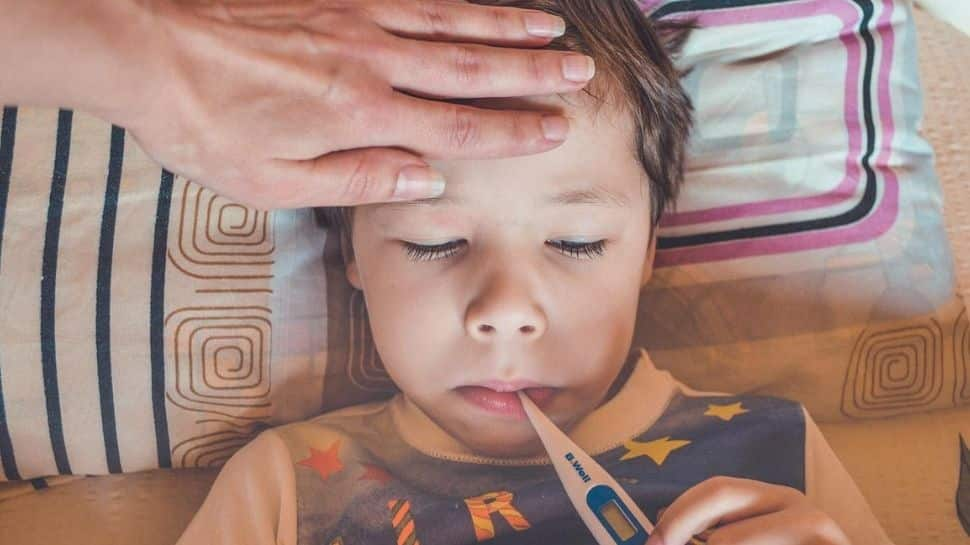

When children have a fever, their temperature is often very high, naturally parents are concerned. There are some important points that parents should keep in mind – experts say that they should not panic and remember that fever is a natural way of fighting off bacterial and viral infections. Dr. Parvinder Singh Narang, Head of Department, Pediatrics, Max Super Specialty Hospital, Shalimar Bagh, shares important tips for managing fever in children.
Ten Golden Tips to Manage Fever in Kids
Dr. Parvinder Singh Narang shares 10 tips to deal with fever in children:
1. An oral body temperature of 36.6 C / 97.9 F or a rectal temperature of 37.0 C / 98.6 F is considered normal. When the rectal temperature is 100.4 F or 38 C, it is considered a fever.
2. If the child is less than 3 months old and the child has fever, then it should be thoroughly examined and examined and treated.
3. Viral infection is the most common cause of fever in more than 90 percent of children; If the general condition of the child is fine, the child only needs antipyretic drugs such as paracetamol and good hydration.
4. It is important to do a proper history checking and examination based on the age of the child, duration of fever, physical condition of the child, local indications, and the epidemiology of the area such as dengue or malaria.
5. Watch for early warning signs – among other things, the baby’s appearance, breathing patterns, if the baby is feeling lethargic or irritable, if the baby is looking pale and has difficulty breathing, but Keep an eye In such a situation, the child needs immediate attention.
6. Systematic investigations and investigations should be done accordingly and then specific treatment should be started, unnecessary use of antibiotics may suppress the signs and cause problem in diagnosis in cases like urinary infection and typhoid fever or pneumonia.
7. If a child has fever for more than 7 days, then it is considered to be a prolonged fever. In addition to common viral and bacterial infections, doctors need to rule out connective tissue disorders or arthritis, or immunodeficiency disorders.
8. Red flag signs in prolonged fever are weight loss, joint pain, swelling, headache or skin rash, or enlarged lymph nodes.
9. Evaluation of fever means careful background or history checking, physical examination and checking the overall condition of the child.
10. Stabilization of a feverish child with hydration is more important than giving antibiotics – we must remember that fever is a friend, it helps fight the disease, and in more than 90 per cent of children, only supportive therapy and paracetamol All are necessary.