















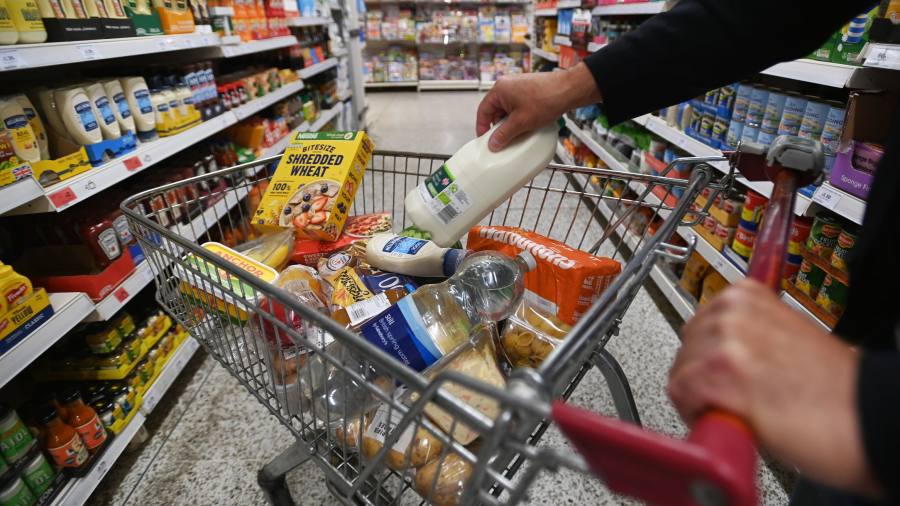
UK inflation stuck at 8.7 percent in May, a more than expected decline of 8.4 percent, for a fourth consecutive month of price increases exceeding expectations.
The figures, along with a rapid increase in the cost of a wide range of goods and services, will reinforce expectations of further interest rate hikes coming from the Bank of England, exacerbating the mortgage “time bomb” that many households are facing.
The BoE is expected to continue raising borrowing costs by at least 0.25 percentage points on Thursday to a range of 4.5 percent to 4.75 percent.
Analysts said there was no good news in the inflation data. Core inflation, which excludes volatile food and energy prices, rose again to 7.1 percent in May from 6.8 percent the previous month, the highest rate since March 1992. 30 years.
A monthly increase of 0.7 per cent in overall prices in May alone suggests that the current rate of price rise is not slowing down.
UK economist Paul Dales, chief UK economist at Capital Economics, said the BoE would have an “uphill battle” to bring down inflation because, “the acceleration in core inflation is leaving Britain increasingly looking like a global outlier and stagnant nation”.
Kitty Asher, chief economist at the Institute of Directors, said the only question now for the BoE was how much to raise borrowing costs. He said the failure to come down on inflation was probably due to “the continued impact of higher energy costs and stronger wage pressures through prices, combined with higher demand for leisure activities among households with all disposable income”.

In details of the figures, the rise in prices again easily offset the reduction in prices with significant increases in the cost of airfares, package holidays, live concerts, games and toys. This was partly offset by falling prices of petrol and diesel.
Food price inflation eased from 19 percent in April to 18.3 percent in May, but the cost of food at supermarkets still rose 0.9 percent in the month of May alone.
Britain’s inflation rate in May was 8.7 per cent, worse than other countries. The equivalent figures are 6 percent in France, 6.3 percent in Germany, 7.1 percent in the EU as a whole, and 2.7 percent in the US, using the most comparable measure.

Chancellor Jeremy Hunt admitted the numbers were difficult for families and businesses across Britain and challenging for the government too.
“We will not waver in our resolve to support the Bank of England as it seeks to take inflation out of our economy, while also providing targeted support with the cost of living,” he added.
As well as its rate decision on Thursday, the BOE will provide some guidance on whether further interest rate hikes are needed. Financial markets expect the cost of borrowings to rise from 4.5 per cent to 5.75 per cent by the end of the year.

UK inflation stuck at 8.7 percent in May, a more than expected decline of 8.4 percent, for a fourth consecutive month of price increases exceeding expectations.
The figures, along with a rapid increase in the cost of a wide range of goods and services, will reinforce expectations of further interest rate hikes coming from the Bank of England, exacerbating the mortgage “time bomb” that many households are facing.
The BoE is expected to continue raising borrowing costs by at least 0.25 percentage points on Thursday to a range of 4.5 percent to 4.75 percent.
Analysts said there was no good news in the inflation data. Core inflation, which excludes volatile food and energy prices, rose again to 7.1 percent in May from 6.8 percent the previous month, the highest rate since March 1992. 30 years.
A monthly increase of 0.7 per cent in overall prices in May alone suggests that the current rate of price rise is not slowing down.
UK economist Paul Dales, chief UK economist at Capital Economics, said the BoE would have an “uphill battle” to bring down inflation because, “the acceleration in core inflation is leaving Britain increasingly looking like a global outlier and stagnant nation”.
Kitty Asher, chief economist at the Institute of Directors, said the only question now for the BoE was how much to raise borrowing costs. He said the failure to come down on inflation was probably due to “the continued impact of higher energy costs and stronger wage pressures through prices, combined with higher demand for leisure activities among households with all disposable income”.
In details of the figures, the rise in prices again easily offset the reduction in prices with significant increases in the cost of airfares, package holidays, live concerts, games and toys. This was partly offset by falling prices of petrol and diesel.
Food price inflation eased from 19 percent in April to 18.3 percent in May, but the cost of food at supermarkets still rose 0.9 percent in the month of May alone.
Britain’s inflation rate in May was 8.7 per cent, worse than other countries. The equivalent figures are 6 percent in France, 6.3 percent in Germany, 7.1 percent in the EU as a whole, and 2.7 percent in the US, using the most comparable measure.
Chancellor Jeremy Hunt admitted the numbers were difficult for families and businesses across Britain and challenging for the government too.
“We will not waver in our resolve to support the Bank of England as it seeks to take inflation out of our economy, while also providing targeted support with the cost of living,” he added.
As well as its rate decision on Thursday, the BOE will provide some guidance on whether further interest rate hikes are needed. Financial markets expect the cost of borrowings to rise from 4.5 per cent to 5.75 per cent by the end of the year.


