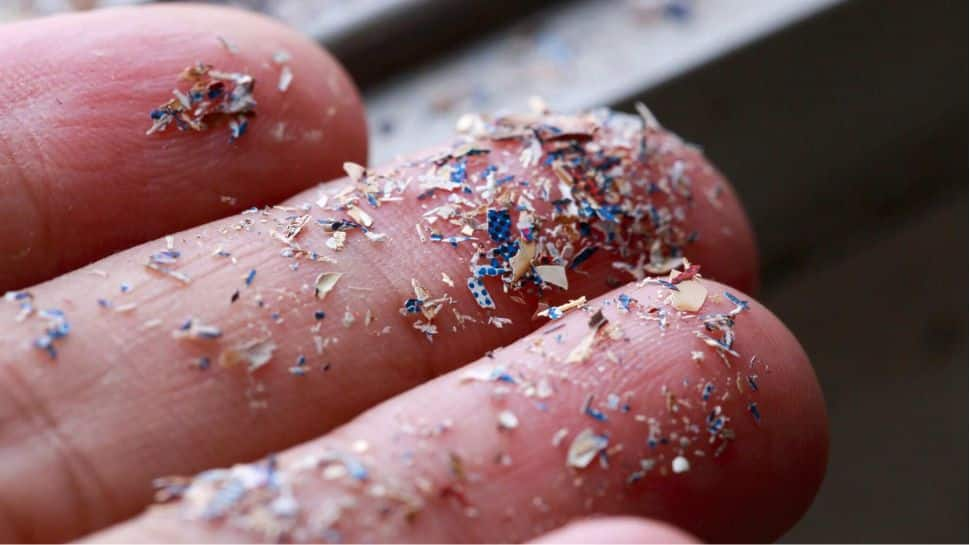

Microplastics, which contain toxic pollutants and chemicals, are rapidly accumulating in our human respiratory tracts, and may pose serious health risks, a study has warned. In 2022, researchers showed that humans could inhale about 16.2 bits of microplastic every hour, the equivalent of a credit card in an entire week. And these microplastics – tiny debris in the environment resulting from the degradation of plastic products – usually contain toxic pollutants and chemicals.
To understand its effects, a team of Australian researchers developed a computational fluid dynamics model to analyze microplastic transport and deposition in the upper airways. They detected the movement of microplastics with different shapes (spherical, tetrahedral, and cylindrical) and sizes (1.6, 2.56, and 5.56 µm) and under slow and fast breathing conditions.
The findings, published in the journal Physics of Fluids, showed that microplastics tend to collect in hot spots in the nasal cavity and the oropharynx, or back of the throat. University of Technology Sydney’s Mohammed S. “The complex and highly asymmetric anatomical shape of the airways and the complex flow behavior in the nasal cavity and oropharynx cause microplastics to deviate from the flow path line and accumulate in those areas,” Islam said. ,
Also Read: Diarrhea In Babies: Treatment, Precautions, How To Prevent Dehydration – Explains Experts
“Flow speed, particle inertia, and asymmetric anatomy affect overall deposition and increase the concentration of deposition in the nasal cavities and oropharynx region,” he said.
Breathing status and microplastic size affected the overall microplastic deposition rate in the airways. An increased flow rate resulted in less deposition, and the largest (5.56 µm) microplastics were deposited more frequently in the airways than their smaller counterparts.
The authors believe that their study highlights a real concern for exposure to and inhalation of microplastics, particularly in areas with high levels of plastic pollution or industrial activity. They hope the results could help inform targeted drug delivery devices and improve health risk assessment.
“This study emphasizes the need for greater awareness of the presence of microplastics in the air and the potential health effects,” said Yuan Tong Gu from Queensland University of Technology in Brisbane.