/cdn.vox-cdn.com/uploads/chorus_asset/file/24016885/STK093_Google_04.jpg)


/cdn.vox-cdn.com/uploads/chorus_asset/file/24808816/Starfield__The_Settled_Systems___Supra_Et_Ultra_____Starfield__The_Settled_Systems___Supra_Et_Ultra_2023_7_25_94252.263_1440p_streamshot.png)










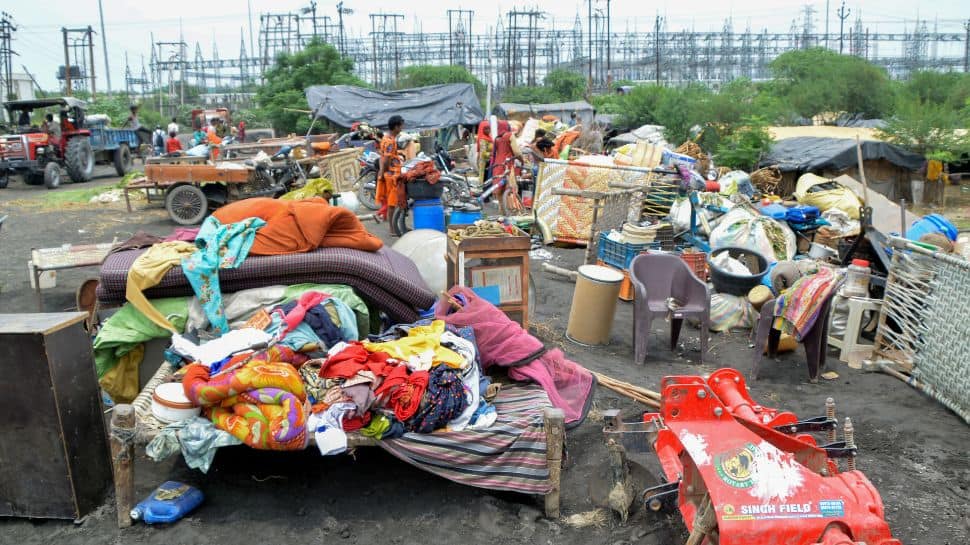

New Delhi: The Gautam Buddh Nagar administration in Uttar Pradesh on Saturday issued a flood alert for low-lying areas along the Hindon due to increased water flow in the river. Around 200 people from five villages were evacuated and shifted to shelter homes after the alert was issued, officials said on Sunday. The river in the district is flowing below the danger mark of 205 metres.
“Around 200 people from five villages have been evacuated and shifted to shelter homes set up by the administration to provide them accommodation, food and health care,” Additional District Magistrate Atul Kumar told news agency PTI.
Kumar, who is also the nodal officer for flood relief work in Gautam Buddh Nagar, said, “The Hindon is currently flowing at 200 meters below the danger mark of 205 metres.”
cre trending stories
The district, which is part of Delhi-NCR and includes the twin cities of Noida and Greater Noida, lies between the Hindon and Yamuna rivers, which are in spate in recent times due to incessant rains and the opening of dams on the upper reaches in the north.
The district recently witnessed floods along the Yamuna river, submerging 550 hectares of low-lying land and affecting thousands of people and animals.
According to official data updated last Sunday, 8,710 people, including 4,748 displaced, have been affected by the floods in the district. 6,308 animals have also been displaced by the floods.
The displaced people have been kept in shelter homes made by converting community centres, where facilities of free food, snacks and medicine are being provided, the district administration said.
Some people, who were rescued from the low-lying flood plains, were living in makeshift tarpaulin camps less than 500 meters from a major shelter home on Pushta (Embankment) Road near Nagli Wajidpur village in Noida’s Sector 135.
Last Sunday, two youths aged 17 and 21 drowned in the Yamuna while taking a bath in the swollen river in Dankaur area of Greater Noida. The bodies of both were taken out on Monday.
Yamuna again above the danger mark in Delhi; Another round of flood possible
The water level of the Yamuna in Delhi crossed the danger mark again on Sunday following an increase in water released into the river from the Hathinikund Barrage following heavy rains in parts of Uttarakhand and Himachal Pradesh. Officials said any further rise in the water level of the river is likely to affect relief and rehabilitation work in the flood-affected low-lying areas of the capital. Revenue Minister Atishi said on Saturday that the Delhi government was on high alert as the water level from Hathnikund barrage was released into the river over 2 lakh cusecs and parts of the Yamuna Khadar (flood plain) could be submerged if the water level rises to 206.7 metres.
After reaching an all-time high of 208.66 meters on July 13, the river’s water level was hovering around the danger mark of 205.33 meters for the past few days.
Central Water Commission (CWC) data shows that the water level rose from 205.02 meters at 10 pm on Saturday to 205.96 meters at 9 am on Sunday. It is expected to reach 206.7 meters by 4 pm.
The India Meteorological Department has predicted heavy to very heavy rainfall in parts of Himachal Pradesh and Uttarakhand till July 25.
According to the CWC data, the flow rate at Hathnikund barrage in Yamunanagar crossed the 1 lakh mark at 9 am on Saturday and remained between 2 lakh and 2.5 lakh cusecs between 10 am and 5 pm. Since then it has remained between 1.5 lakh cusec to 2 lakh cusec.
“This significant amount of water poses a medium-level flood risk in the capital, which is still recovering from the worst floods it experienced in the second week of July.
Bhim Singh Rawat, South Asia Network’s Associate Coordinator on Dams, Rivers and People, said, “The Yamuna River in Delhi will regain most of its floodplain in the second round of floods. Given the valuable insights gained from this month’s last floods, city planners and policy makers should heed the lessons learned. Citizens are counting on a quick response from the authorities, hoping that all gates of the ITO Barrage will be opened and fully functional. Also, any broken Immediate attention should be given to fix the sites and dams.”
In the upper catchment areas, mainly Himachal Pradesh and Uttarakhand, there has been slight fluctuation in the water level in the last four to five days amid rains.
Officials of the Delhi Irrigation and Flood Control Department said that heavy rains in upper Delhi will affect the rehabilitation of flood-affected families in low-lying areas of the capital and they may have to stay in relief camps for a long time.
It may also affect the water supply in the city, which returned to normal only on Tuesday after being affected for four or five days due to water-logging in a pump house in Wazirabad.
The pump house supplies raw water to the Wazirabad, Chandrawal and Okhla treatment plants, which account for about 25 percent of the city’s supply.
Some parts of Delhi have been battling waterlogging and floods for more than two weeks.
Initially, heavy rains on July 8 and 9 resulted in heavy waterlogging, with the city receiving 125 per cent of its monthly rainfall quota in just two days.
Subsequently, heavy rains in the upper catchment areas of the Yamuna including Himachal Pradesh, Uttarakhand and Haryana led to the river’s water level rising to a record level.
At 208.66 m on 13 July, the Yamuna surpassed its previous record of 207.49 m set in September 1978 by a significant margin. It breached the embankments and entered the city to a greater depth than in the previous four decades.
The consequences of the floods have been devastating, with over 27,000 people being evacuated from their homes. Crores have been lost in terms of property, business and earnings.
Experts attribute the unprecedented floods in Delhi to the encroachment of the river’s floodplain, excessive rainfall within a short period of time and raising the river bed due to siltation.