

/cdn.vox-cdn.com/uploads/chorus_asset/file/24016885/STK093_Google_04.jpg)


/cdn.vox-cdn.com/uploads/chorus_asset/file/24808816/Starfield__The_Settled_Systems___Supra_Et_Ultra_____Starfield__The_Settled_Systems___Supra_Et_Ultra_2023_7_25_94252.263_1440p_streamshot.png)










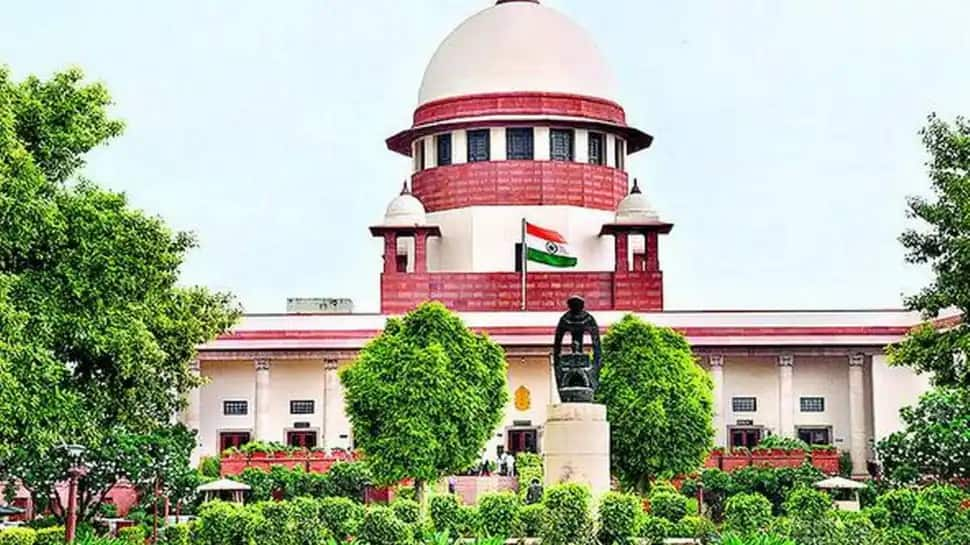

New Delhi: The Supreme Court is scheduled to hear on Monday a plea seeking directions to states and the Center to provide free sanitary pads to girls in classes 6-12 and ensure separate women’s toilet facilities in all government-aided and residential schools. A bench of Chief Justice DY Chandrachud and Justices JB Pardiwala and Justice Manoj Mishra will hear the plea of social activist Jaya Thakur.
The top court had earlier asked the Center to prepare a national model and a standard operating procedure to be followed by all states and union territories for managing menstrual hygiene for girls studying in schools.
On April 10, the apex court had said that the issue is of “extreme importance” and the Center should engage with all stakeholders for the implementation of a uniform national policy on management of menstrual hygiene in schools, including government and aided schools.
cre trending stories
It had appointed Secretary, Ministry of Health and Family Welfare (MoHFW) as the nodal officer to coordinate with all states and union territories and collect relevant data for formulating a national policy.
The top court had said that the Ministry of Health and Family Welfare, Ministry of Education and Ministry of Jal Shakti are already running schemes to address issues related to menstrual hygiene.
“At the present stage, we are of the view that it would be appropriate if the Central Government, in coordination with all State Governments and Union Territories, ensures that a uniform national policy is formulated with sufficient flexibility for the States and Union Territories to make adjustments based on the prevailing conditions in their areas”, it said.
Thakur, in her petition filed through advocate Varinder Kumar Sharma, said that adolescent girls aged between 11 and 18 years, coming from poor backgrounds, face serious difficulties in getting education, due to lack of access to education, which is a constitutional right under Article 21A of the Constitution.
“These are adolescent women who are not equipped and educated by their parents about menstruation and menstrual hygiene.
“Deprived economic status and illiteracy lead to prevalence of unhygienic and unhygienic practices, which have serious health consequences, increase in persistence and ultimately lead to school dropout,” the petition said.


